In spring 1987, a group of residents met at Viva Stroyke's house on The Strand, at what Easy Reader calls "The Foot of Longfellow," to talk about starting the Hermosa Beach Historical Society. They were Rick Learned, Ricardo Reznichek, Patricia Gazin, Bunny Seawright, Bill Schnieder, Viva Stroyke, Eddie Webber, Sue Horger and Larry Gray. Almost four decades later, the collection they started holds a credential that also belongs to the J. Paul Getty Museum, the de Young and the Los Angeles County Museum of Art.
Easy Reader reports that the Hermosa Beach Museum is now the only museum in the South Bay accredited by the American Alliance of Museums. The museum's own August 11 announcement says the same. Its first exhibit since accreditation looks at what the town's collection missed. It opens on November 14, the Saturday before Hermosa for the Holidays fills Pier Plaza.
What the Accreditation Actually Certifies
AAM announced three first-time accreditations from its February 2026 Accreditation Commission meeting: Fort Worth Botanic Garden in Texas, the National Museum of Puerto Rican Arts & Culture in Chicago, and the Hermosa Beach Museum. In its July 30 announcement, the Alliance put the total at 1,130 accredited museums out of roughly 33,000 in the country. That works out to about 3.4 percent.
Those figures matter because of what the standard demands of a small institution. Easy Reader lists the requirements: a museum has to be open to the public at least 1,000 hours a year, employ at least one full-time paid staff member and a full-time director, and catalog at least 80 percent of its permanent collection. It then goes through document verification, financial reporting and an on-site inspection by an AAM team. According to the museum's own accreditation page, the status lasts 10 years and comes after a year-long self-assessment and an in-person peer review.
Ricardo Reznichek, a founder and board member, told Easy Reader, "to be as small as we are and to meet all the standards is pretty unique." Museum President Greg McNally's August 11 release, as quoted in the same Easy Reader article, looked ahead:
"It also strengthens our hand as we move forward with our expansion, giving us greater credibility with funders and the community as we build Hermosa Beach's history and a home that matches its legacy."
From Classroom 7 to a National Credential
The museum got here by staying put and adding one room at a time. Every date below comes from Easy Reader, the museum, AAM or the City of Hermosa Beach.
| Year | Milestone |
|---|---|
| 1987 | Residents meet on The Strand to found the Hermosa Beach Historical Society |
| March 1991 | Museum opens in classroom 7 of the former Pier Avenue Junior High School |
| 2007 | Museum expands into the former school's woodshop |
| February 2026 | AAM Accreditation Commission grants first-time accreditation |
| October 13, 2026 | Hermosa Beach City Council formally recognizes the accreditation |
| November 14, 2026 | "The Making of a Museum" opens at a community open house |
Easy Reader says the collections that earned the credential include surfboards, beach volleyball material, Tongva artifacts and signs from some of Hermosa's historic businesses. One of the better-known pieces is a 1936 balsa paddleboard donated by Jim Mollina. He raced it in the Catalina Classic Paddleboard Race through the 1980s, and it was hung in the museum in September 2024.
An Exhibit That Audits Its Own Shelves
The museum's exhibit page describes "The Making of a Museum: From a Closet Collection to an Accredited Museum" as a history of the institution itself. It starts before the museum existed, with the city records, photographs and private collections that held pieces of Hermosa's past, and it includes objects rescued from local businesses that have since closed.
The second half is more unusual. According to the museum, the exhibit looks at the communities, industries and everyday experiences that have been underrepresented or left out of the collection. It names Japanese American and Mexican immigrant experiences, local labor and industry, and the community's earliest history. It also covers objects that came in without documentation or provenance, and how the museum is now using professional collecting practices, digitization and better collections management to close those gaps. In the museum's words, the exhibit asks visitors to consider "what we saved and what we missed, but what we choose to save next."
The exhibit opens at a community open house on Saturday, November 14, from noon to 4 p.m. The museum says more details are coming. Until then the main gallery has "Threads of Time," which tells the stories of ten Hermosa Beach women through historic garments and personal histories. It also has a pop-up of five bathing suits and five new stories curated by summer 2026 college intern Sara Carroll. The museum is at 710 Pier Avenue and lists public hours of Wednesday through Sunday, noon to 4 p.m. Those hours come from a live page, so check them before you go.
The Tile Tour, One Week Earlier
The museum's other November event deals with the same question in a different form. On Saturday, November 7, it runs "California in Clay: A Tile Bus Tour Tribute to Diana Mausser of Native Tile." The events page calls Mausser, a Hermosan, the "Queen of California Tile." She earned a BA in Design from UCLA in 1986 and started Native Tile, which made tile in the style of 1920s to 1940s California. That tile now decorates homes around the world.
The tour starts at the Adamson House in Malibu, stops at sites featuring Mausser's work, and ends with refreshments at a Spanish Colonial Revival house in Manhattan Beach. The timing isn't settled yet. The listing shows 10 a.m. to 3 p.m., but the description says roughly 9 a.m. to 4 p.m. The museum also notes that the tour includes walking and stairs, and that food and refreshments come with the ticket.
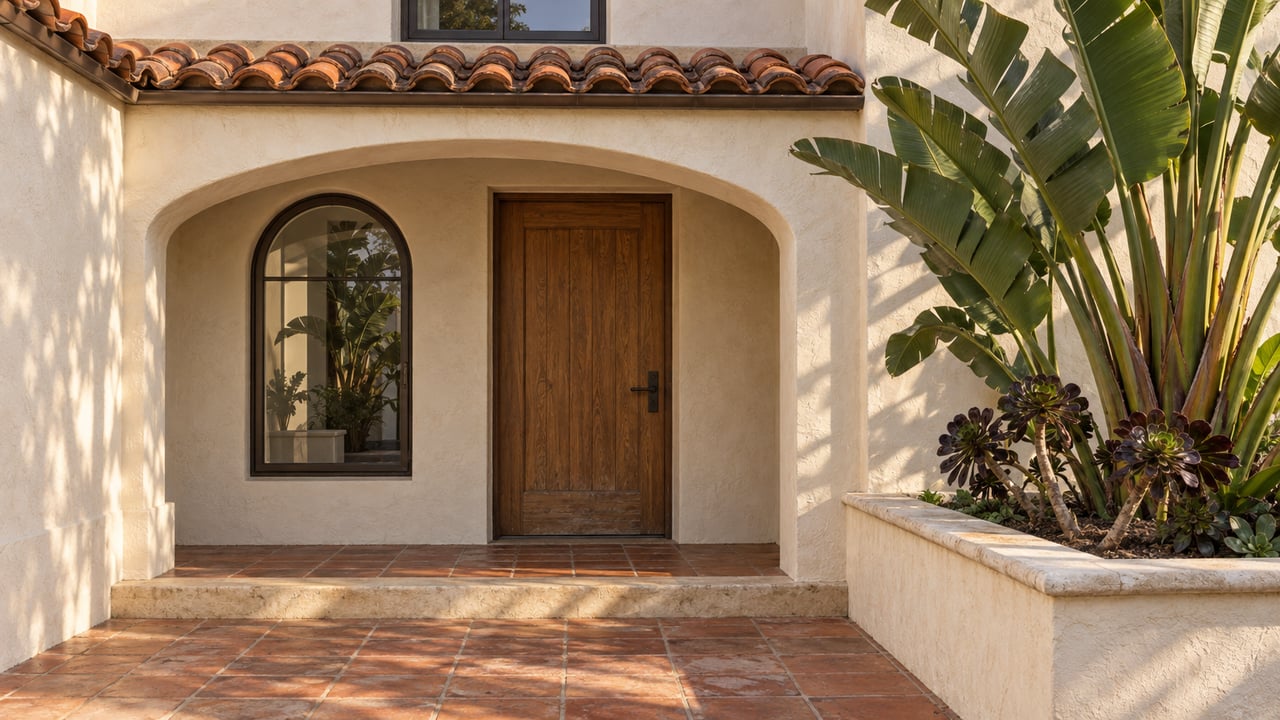
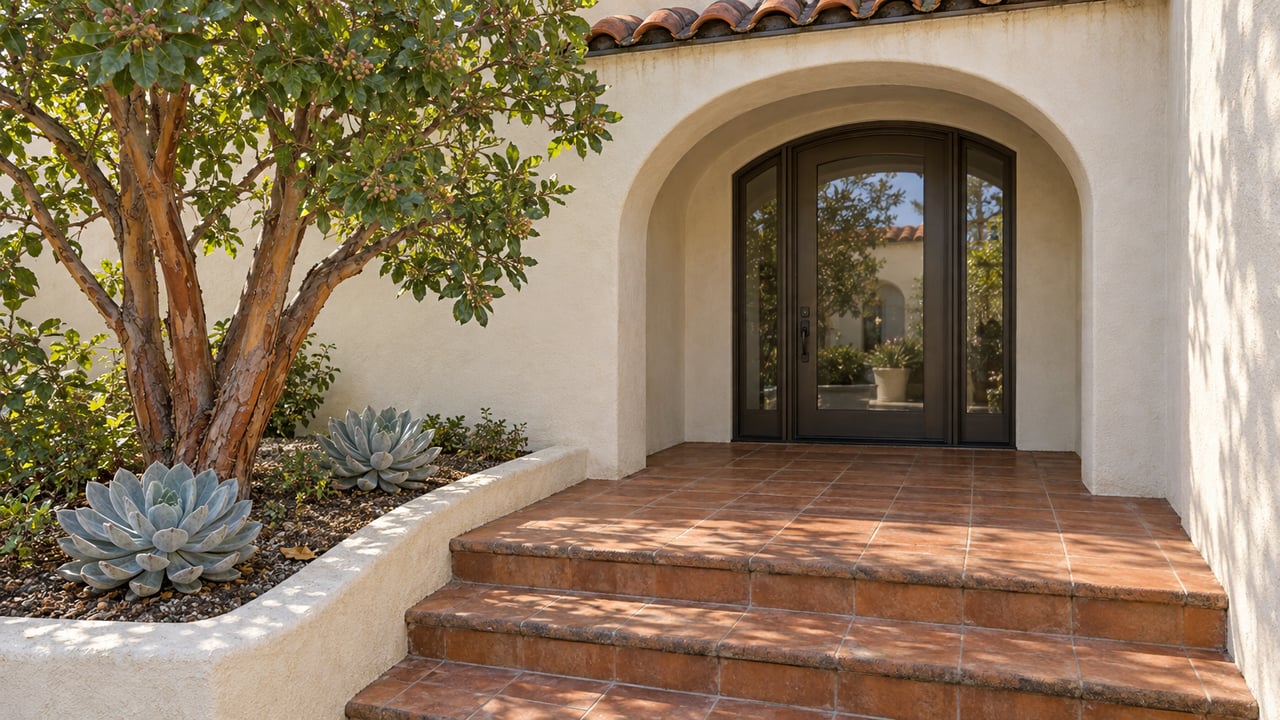
For anyone who lives in an older house in the beach cities, the tour treats a building's tile as local history. Mausser, a Hermosan, built a business making tile in the 1920s to 1940s California style. A museum that has just put an exhibit together about what the town failed to save is now spending a Saturday on the craft behind those interiors.
Six Days Later, Pier Plaza Takes Over
The week after the open house, downtown changes. Hermosa for the Holidays runs November 20 to 22, produced by the Hermosa Beach Chamber Foundation and the City of Hermosa Beach. It has run every year since its first edition in 2021. The lineup will feel familiar. The Ferris wheel, storytime, Kids Creationz Market, Giving Village and Rock for Tots were all part of past years. The Daily Breeze reported that Rock for Tots marked its 20th anniversary in 2025.
Here's the Chamber's posted schedule for the weekend:
- Friday, November 20: Elf on the Shelf Scavenger Hunt all day, and the Ferris wheel on Pier Plaza from 5 to 9 p.m.
- Saturday, November 21: Retail pop-ups and Letters to Santa on Pier Plaza from 10 a.m. to 4 p.m., live music at Java Man from 11 a.m. to 3 p.m., the Ferris wheel from noon to 9 p.m., Kids Creationz Market on the upper Pier Avenue sidewalk from 3 to 6 p.m., and the Family Fun Fest presented by Coast Music from 3 to 8 p.m.
- Sunday, November 22: Storytime Tent at Uncorked and photos with Santa from 10 a.m. to 4 p.m., the Nonprofit Giving Village from 1 to 6 p.m., a community concert by South Bay Music Connection from 3 to 5 p.m., Rock for Tots from 5 to 8 p.m., and the Tree Lighting Ceremony with Santa's arrival from 5:45 to 6:15 p.m.
The City's calendar lists the event on November 21 and 22 only. The Friday Ferris wheel hours come from the Chamber's program. The Chamber currently names ten Giving Village nonprofits, among them the Woman's Club of Hermosa Beach, Hermosa Beach Friends of the Library, Hermosa Beach Sister City Association, Leadership Hermosa Beach, Soroptimist International of South Bay and Southbay Boardriders.
The Rest of the Town Is Being Put Back Together
The city spent the fall restoring things of its own. Kelly Courts at Clark Field, 861 Valley Drive, reopened with a ribbon cutting on October 1. The City's 2025 staff report set the scope of the CIP 619 project across four pickleball courts, one tennis court and two basketball courts. The plan was to resurface and restripe every court, replace walls and fencing, add windscreens, upgrade the lighting and build an accessible path. The City's court use policy says residents need a current annual pickleball membership to book through Rec.us. Reservations open 14 days ahead, last up to two hours, and Fridays are walk-on only.
The renovated playground at Seaview Park reopened on October 13. On Hermosa Avenue, Phase 3 of the Los Angeles County Sanitation District's sewer lining started October 5 and is expected to run through mid-November. Work happens weekdays from 8 a.m. to 4 p.m., with temporary lane and parking closures on Hermosa Avenue and alley closures on Palm Drive. If the crews hold to that estimate, the avenue should be clear by the time the Ferris wheel goes up on Pier Plaza. The City's construction notice is the place to check for updates.
If your home has original tile, period details or a story behind it, Justin Kuo at Astoria Luxury Estates would be glad to talk about what makes those features worth keeping, with an architect's eye on how they were built. Reach Out Today.