Thinking about buying or selling in Manhattan Beach but unsure how to read the market? You are not alone. Prices can swing quickly here because a few high-end sales can move the averages and each micro-area behaves differently. In this guide, you will learn what drives values, which metrics matter, how the Sand, Tree, and Hill Sections compare, and how to time your move. Let’s dive in.
What drives Manhattan Beach pricing
Manhattan Beach is a coastal city with limited land and high demand. That mix creates sustained competition for well-located homes.
- Schools and boundaries: The local public schools are widely recognized for strong performance, and many buyers prioritize addresses within city school boundaries. School proximity and assignments can support premiums.
- Beach lifestyle and amenities: The Strand, Pier, downtown dining, shopping, and walkability draw consistent buyer interest, which supports higher per-square-foot pricing near the coast and core.
- Scarcity and zoning: Most neighborhoods are low-density and the city footprint is small. New supply is limited by zoning, setbacks, and coastal rules, so inventory often stays tight.
- Views and lot traits: Ocean views, larger lots, newer custom builds, and thoughtful design details command notable premiums.
- Commuter access: Proximity to LAX and Silicon Beach employment centers keeps demand strong among professionals.
- Coastal regulations and build costs: Permitting complexity and higher construction costs make new or expanded supply slower to deliver, which supports pricing.
The metrics that matter here
Market snapshots on national portals can be misleading in a city with a wide price spectrum. Focus on section-level data and these core indicators.
- Inventory and months of supply: Lower supply favors sellers. Manhattan Beach often runs tight, especially for single-family homes. Track weekly or monthly trends rather than long-term averages.
- Median price vs mean price: Median tells you more here because a few ultra-luxury sales can push the average up. Compare by section and property type for clarity.
- Price per square foot: This is essential for side-by-side comparisons within a section. Sand and Hill Sections with strong views typically lead the market, while Tree Section sits in a moderate-high range.
- Days on market: Short DOM, often under 30 days for well-priced single-family homes, signals momentum. Longer DOM points to overpricing or property-specific concerns.
- Sale-to-list ratio: Above 100 percent suggests competitive bidding; below 100 percent indicates more negotiation room. Use this by section to set expectations.
- Pending ratio: A high share of pending versus active listings suggests short-term demand strength.
- New listings vs closed sales: More new listings with fewer closings can hint at cooling. The reverse suggests heating.
Tip: Ask for a 90-day section-specific comp pack that lists sold, pending, and active properties with price per square foot and DOM. This is the most accurate way to triangulate value.
Seasonality you can plan around
- Spring lift: Listing in late winter to spring often captures the strongest buyer activity. Sale-to-list ratios may improve during these months.
- Summer closings: Many transactions close in late spring and summer. Families often plan moves around the school calendar.
- Fall and winter: Activity can slow during late fall and the holidays. Buyers may find more options and negotiation room, though unique oceanfront properties can sell any time due to scarcity.
Manhattan Beach sections explained
Each section has its own lifestyle and pricing dynamics. Use the section as your first filter when selecting comps.
Sand Section
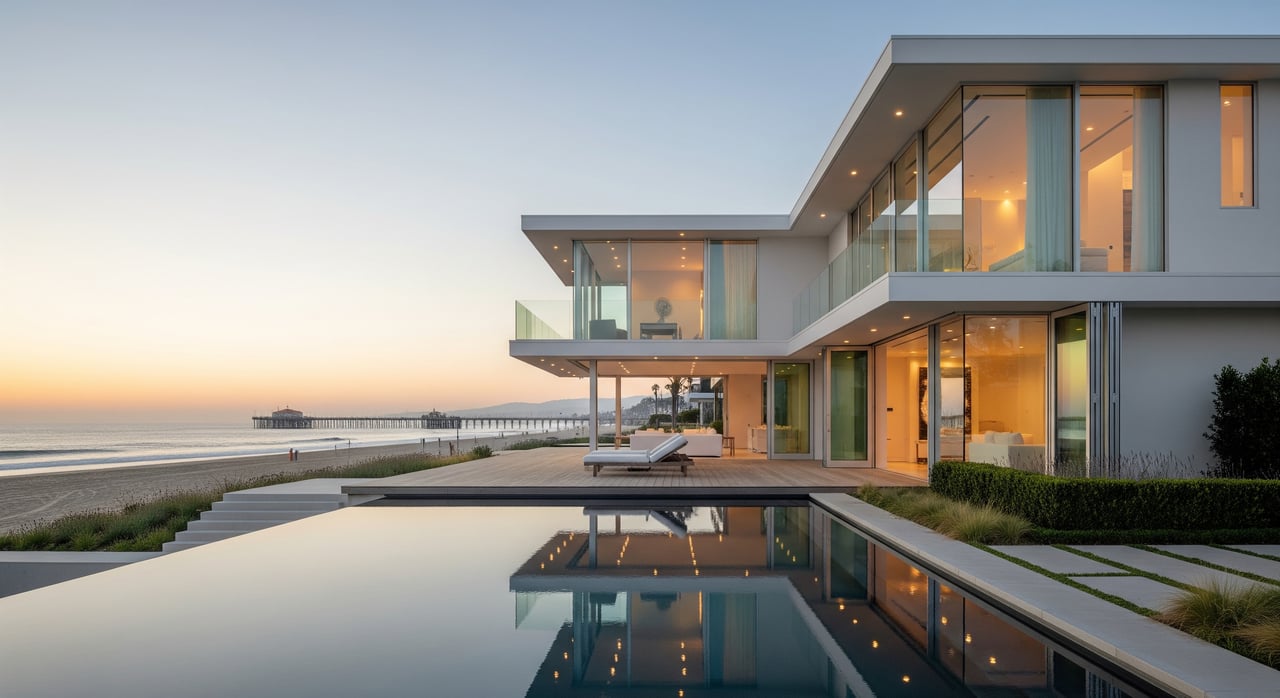
- Profile: Oceanfront and blocks nearest the Strand and downtown. High renovation and rebuild activity on available parcels.
- Value drivers: Direct beach access, unobstructed views, and walkability to the Pier and dining. Often the highest per-square-foot values in town.
- Watch-outs: Coastal permitting adds time and complexity. Insurance can be higher for beachfront homes and flood zones. Inventory is extremely limited.
- Comp tips: Include view quality in every comp. Partial versus unobstructed views create large pricing differences.
Tree Section
- Profile: Central, leafy streets with a mix of vintage homes and newer construction on family-sized lots.
- Value drivers: Proximity to downtown, neighborhood character, lot size, and convenient access to schools and parks.
- Watch-outs: Pricing varies by lot width, setbacks, and renovation level.
- Comp tips: Match lot size, age, and finish level. Interior upgrades and thoughtful floor plans matter.
Hill Section
- Profile: Elevated homes with many wide ocean and coastline views, often custom builds on redeveloped parcels.
- Value drivers: View corridors, privacy, and newer construction quality. Site conditions and grading influence cost and value.
- Watch-outs: Engineering, foundation, and seismic considerations can affect budgets and timelines.
- Comp tips: Align view quality and sightlines. A small change in view can mean a big change in price.
North Manhattan Beach and El Porto
- Profile: Northern area near 45th Street with a distinct beach and surf vibe. Mix of bungalows, small single-family homes, and condos.
- Value drivers: Surf access, bike path proximity, and relatively more approachable entry points than Sand, Tree, or Hill.
- Watch-outs: Parking and walkability can vary by street.
- Comp tips: Compare similar property types and parking situations. Buyer profiles can skew younger and more active.
East and Interior areas
- Profile: Interior neighborhoods farther from the sand, yet still within city limits and school boundaries.
- Value drivers: Larger yards, quieter streets, and value per square foot compared with ocean-adjacent blocks.
- Watch-outs: Buyers trade off beach proximity for space and price efficiency.
- Comp tips: Match lot size, home condition, and proximity to major corridors.
How to read comps like a local
Start with your section, then refine by property traits. Ask your agent for a comp package that includes:
- Recent 90 to 180 day sold comps within your section
- Price per finished square foot and sale-to-list ratio for each comp
- DOM and any price reduction history
- Lot size, view description, and remodel or new-construction flags
- Permit history and notable title items, including easements or seawall ownership where relevant
For view homes, insist on comps with very similar view quality. View premiums are non-linear, so partial, peek, and unobstructed tiers should not be mixed.
Buyer playbook for Manhattan Beach
- Choose your section first: Decide on views, walkability, or larger lots. This narrows your search and clarifies budget.
- Secure financing early: Jumbo pre-approval is common. Cash is more prevalent at the top end and can shorten timelines.
- Use price per square foot: Compare active, pending, and sold comps in your section, then adjust for view, lot size, and condition.
- Prepare for competition: Strong earnest money, clear timelines, and escalation terms can help on well-priced homes.
- Bring the right inspectors: For beachfront and hill properties, prioritize geotechnical, foundation, and flood-risk reviews. For older homes, pay attention to seismic, plumbing, and electrical systems.
- Budget for insurance and permitting: Flood coverage and coastal permitting can add cost, especially near the shoreline.
Seller strategy that wins
- Price by section and view tier: Citywide medians are less useful here. Align to recent comps within your micro-area and view class.
- Time your launch: Late winter to early spring often brings more buyers. Unique oceanfront listings can perform across seasons due to scarcity.
- Elevate presentation: Small updates and staging that highlight indoor-outdoor living can lift perceived value. Focus on light, flow, and outdoor spaces.
- Prepare clean disclosures: Coastal conditions, prior erosion or repairs, flood history, and permit logs should be organized up front to build buyer confidence.
- Support the appraisal: At higher price points, appraisals face more scrutiny. Provide a comp package that justifies your pricing.
Risks, rules, and costs to factor
- Coastal permitting: Homes near the shoreline may require additional approvals that affect project scope and timelines. Plan review windows into your schedule.
- Flood and erosion: Some properties sit in FEMA flood zones. Lenders may require flood insurance, and coastal risk can influence underwriting.
- Short-term rental rules: Local policies are typically restrictive. If investment income is part of your plan, verify current rules before you buy.
- Property taxes: Under California’s Prop 13 framework, assessed value typically resets upon sale and then adjusts modestly each year. Review local assessments during due diligence. Mello-Roos is less common here but always check title.
Are condos and townhomes better value?
Condos and townhomes can offer a more attainable entry point compared with single-family homes in the Sand, Tree, and Hill Sections. They can also reduce maintenance while keeping you close to the beach lifestyle. Compare HOA dues, reserves, short-term rental rules, and building condition, then benchmark price per square foot against nearby single-family comps.
Putting it all together
When you evaluate Manhattan Beach, think section first, then drill into the metrics that matter. Use price per square foot by micro-area, track DOM and sale-to-list ratios, and match view quality in every comp. Plan around seasonal patterns and factor in coastal permitting, inspections, and insurance so there are no surprises later.
If you want a tailored market snapshot or help positioning your home for maximum impact, connect with Justin Kuo for design-led, data-driven guidance backed by full-service marketing and local expertise.
FAQs
What drives home prices in Manhattan Beach?
- Limited supply, strong school boundaries, beach proximity, and ocean views create consistent demand and support premiums, especially in Sand and Hill Sections.
How do Sand, Tree, and Hill Sections compare on value?
- Sand and Hill often lead in price per square foot due to views and walkability. Tree offers larger lots and central access at a moderate-high price tier.
What days-on-market should I expect for a well-priced home?
- Well-positioned single-family homes often move in under 30 days, while condos or homes needing major work can take longer.
How should I use price per square foot in comps?
- Compare by section and property type, then adjust for view, lot size, and condition. For view properties, match view quality closely.
When is the best time to list in Manhattan Beach?
- Late winter through spring commonly brings the most buyer activity and stronger sale-to-list ratios, though unique waterfront homes can sell year-round.
What extra costs should beachfront buyers plan for?
- Potential flood insurance, geotechnical and structural inspections, and coastal permitting timelines that can add both cost and complexity.
Are condos or townhomes a good entry into the market?
- They can offer lower price points and less maintenance near the beach. Compare HOA health, rules, and building condition before deciding.